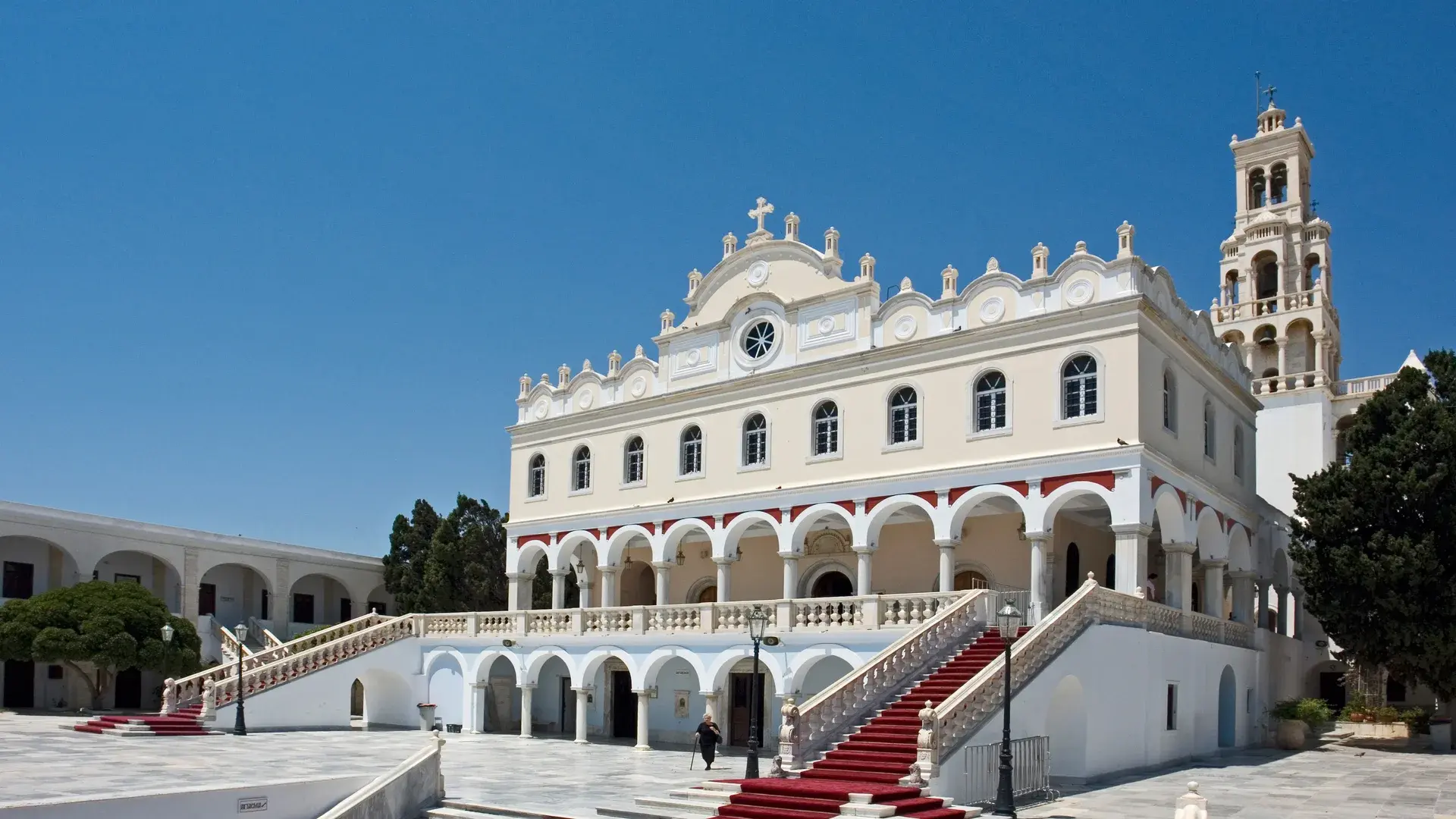
How do you get to Tinos from Mykonos?
By ferry, in well under an hour. The Greek National Tourism Organisation puts the crossing at 15 min–30 min; Golden Star Ferries, one of the companies on the route, gives 20 min–35 min depending on whether you take a high-speed craft or a conventional ferry.
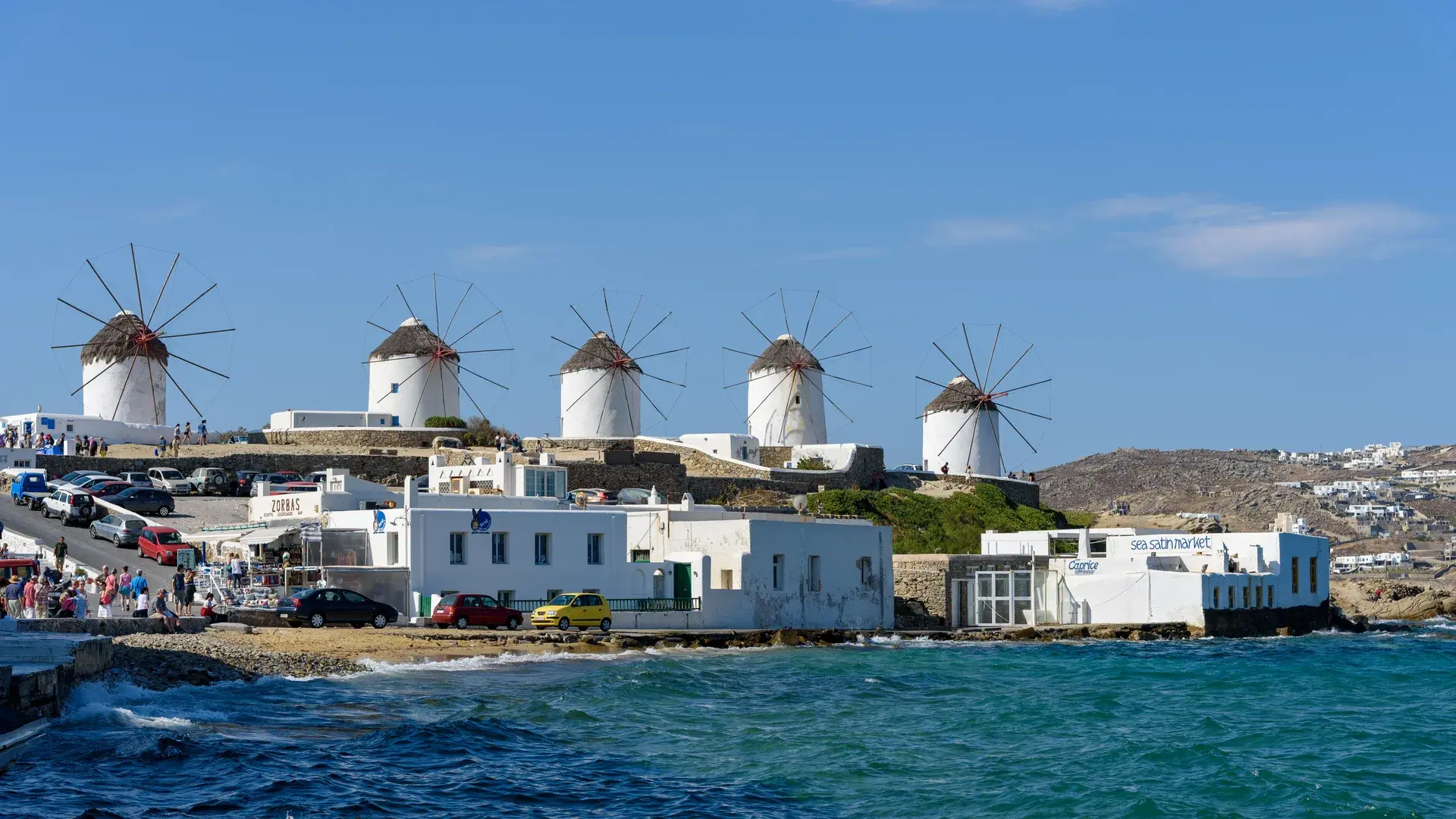
Golden Star Ferries and Fast Ferries both call at Tinos and Mykonos on their lines from Rafina, with several departures a day in season. In Mykonos the ferries use the new port at Tourlos, so allow time to get there from Chora; how, is in the old port and the new port. The 2027 timetables are not out yet.
What is Tinos known for?
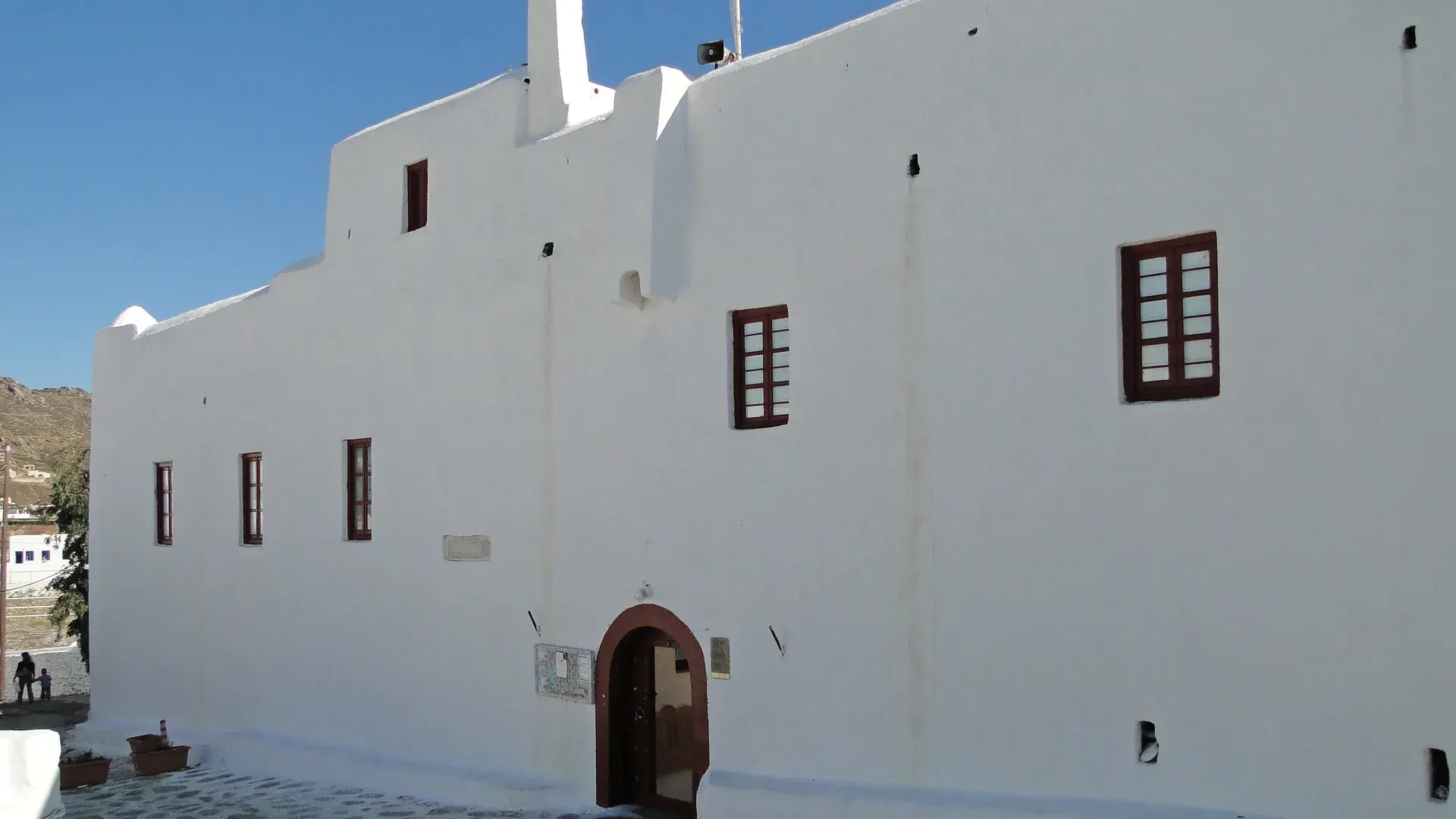
Faith, marble and villages. The fourth largest island of the Cyclades is bound up with the church of the Virgin Mary of Tinos, which dominates its Chora and is, in the tourism organisation’s words, one of the most important pilgrimage destinations in Orthodoxy.
It is also an island of marble craftsmanship and the birthplace of the painters Nikolaos Gyzis and Nikiforos Lytras and the sculptor Yannoulis Chalepas. Inland, about 40 traditional villages and more than 600 dovecotes sit among terraced hills linked by footpaths.
On 15 August, the Dormition of the Virgin, pilgrims come to Tinos in their thousands; if your trip falls then, expect a very different day.
What can you see in a day on Tinos?
The church and the museum are in Chora, a short walk from the harbour; the Kionia sanctuary is a short ride along the coast. These are the hours the official bodies publish:
| Place | Where | Open (official) |
|---|---|---|
| Church of the Virgin Mary of Tinos | Chora, above the harbour | No hours published by an official source |
| Archaeological Museum of Tinos | Chora | All year 08:30–15:30, closed Tuesdays; €5, reduced €3 |
| Sanctuary of Poseidon and Amphitrite | Kionia, 3 km west of Chora | 1 April–31 October 08:30–15:30, closed Tuesdays; closed in winter |
| Villages and dovecotes | The interior of the island | Open countryside, on foot or by car |
Why visit the Archaeological Museum of Tinos?
For the pithamphorae, the large relief-decorated jars that Tinian potters made in the 8th and 7th centuries BC. The Ephorate of Antiquities of the Cyclades calls the Tinos workshop one of the most important in the Aegean, and its jars carry what is probably the earliest known depiction of the birth of Athena and perhaps the oldest of Theseus facing the Minotaur.
The museum also shows marble dolphins and seahorses from the Kionia sanctuary and a sundial by the ancient astronomer Andronikos of Kyrrhos. If you saw the Mykonos Pithos in the museum above the old port of Mykonos, it came from the same Tinian tradition; it is in our windmills and Little Venice walk.
What is the Sanctuary of Poseidon and Amphitrite?
The only sanctuary in the Cyclades dedicated to the god of the sea and his wife. Founded at the end of the 4th century BC, it drew pilgrims from as far as southern Italy, Asia Minor and Africa in the 3rd century BC, and the geographer Strabo called it worth seeing.
Poseidon was worshipped here as a healer, and Amphitrite as the goddess who cured barren women. The site opens only from April to October; in winter, visits are arranged through the Museum of Tinos.
Back in Mykonos for the night
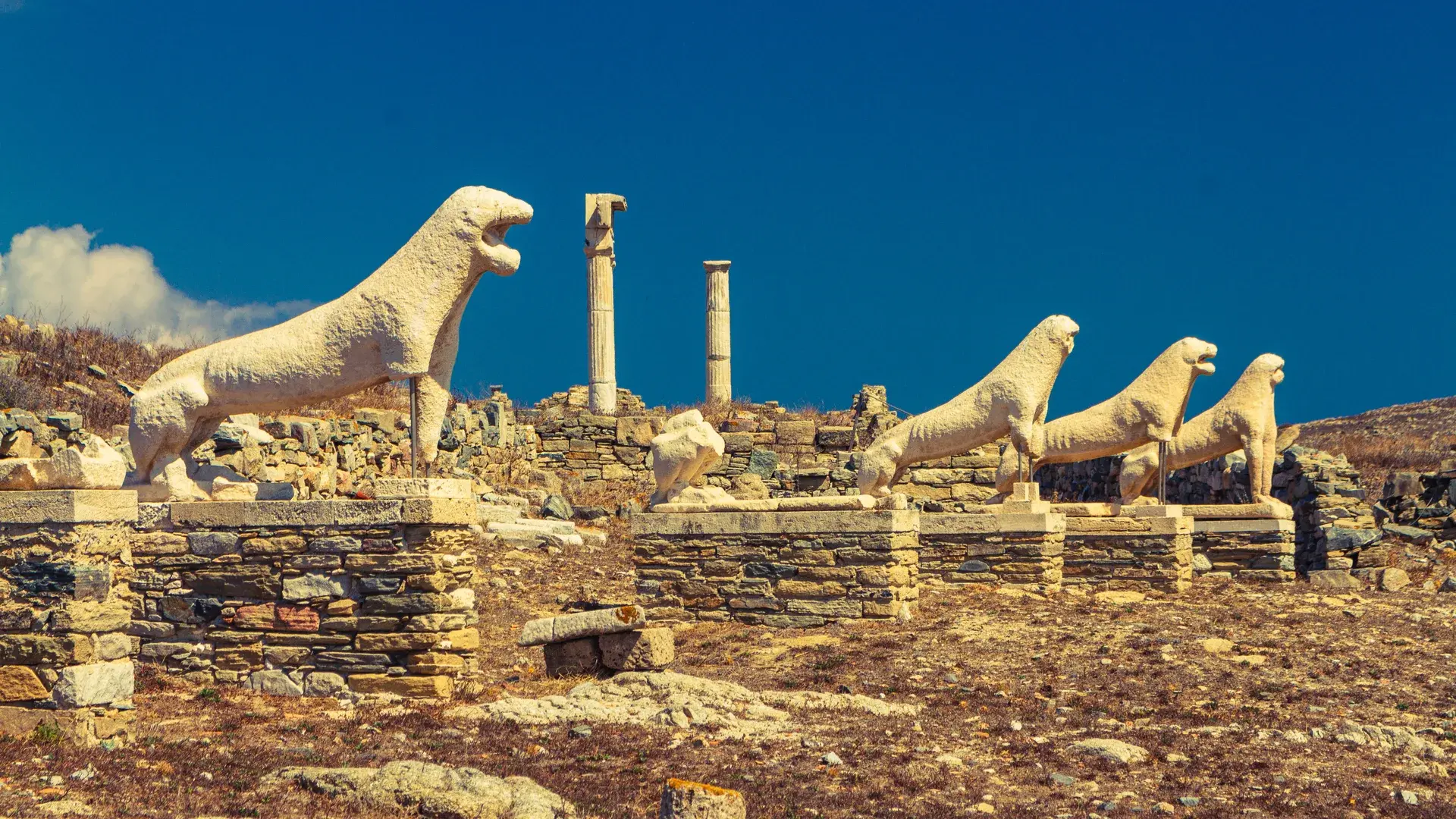
With a crossing this short, you can stay on Tinos into the evening and still be back for a night in Mykonos Town; check the last boat of the day with the operator when you book. For another half-day from the same island, there is Delos.