Where are the windmills of Mykonos?
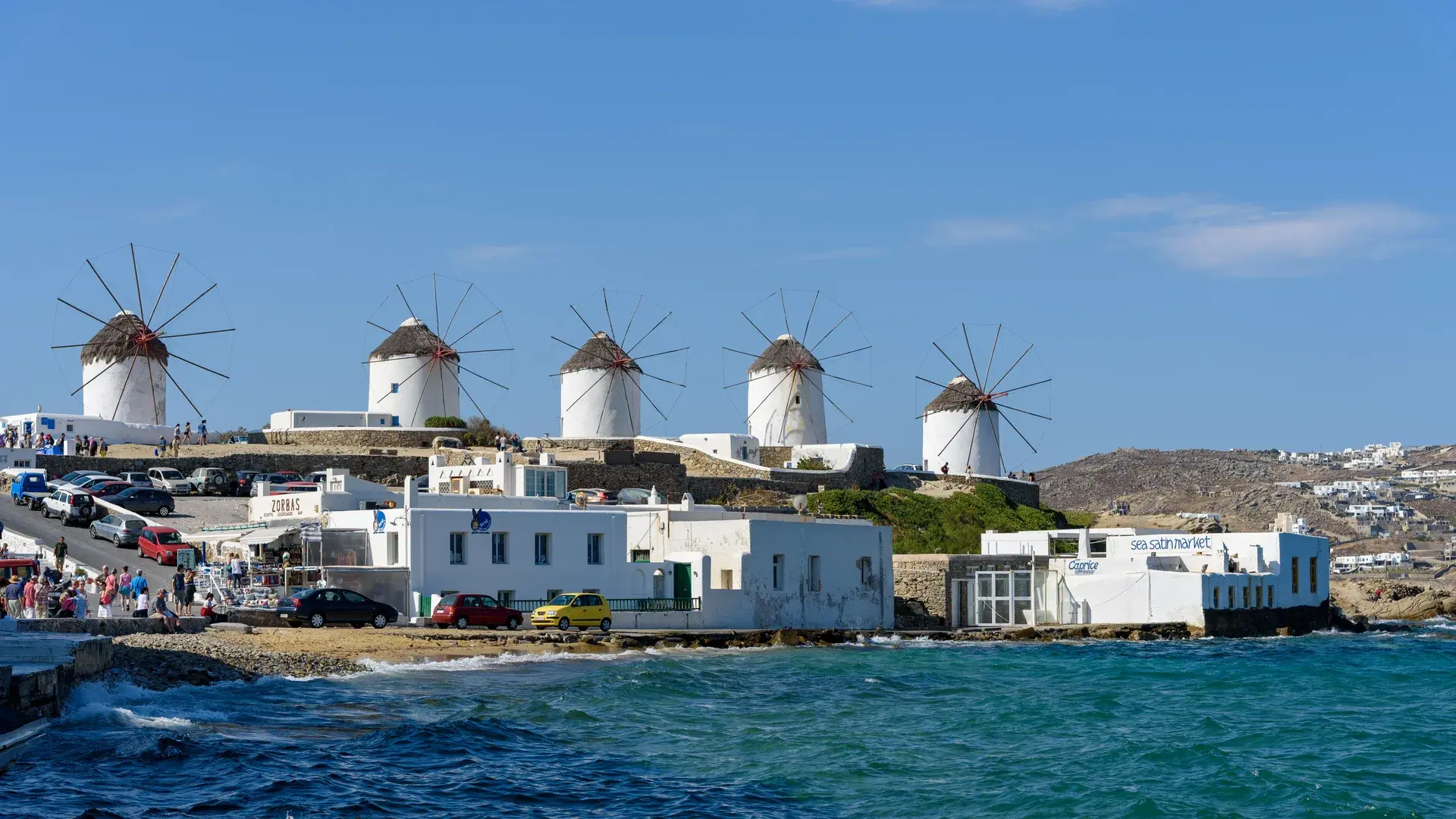
On the ridge at the southern edge of Chora, between Alefkandra, the Little Venice quarter, and the Niochori neighbourhood. These are the mills the municipality calls the most photographed on the island: white, solid and lined up facing the open sea.
From the old port it is a short walk through the lanes of town. The club behind our nights, WE ❤ MYK Club, describes itself as within walking distance of the windmills, Little Venice and the old harbour, which tells you how compact this corner of Mykonos Town is.
Why does Mykonos have so many windmills?
Because of the wind. The municipality counts, on average, no more than about ten days of total calm a year on Mykonos, and from the late 18th to the mid-19th century 28 windmills were working on the island, in Chora and in Ano Mera.
The mills were usually owned jointly by landowners, merchants and sailors, and some belonged to monasteries such as Panagia Tourliani, mostly through donations. They ground local grain into flour, the staple of island life, and the town baked it into paximadi, the twice-baked rusk it supplied to ships crossing the Aegean.
Milling stopped around the middle of the 20th century. Of the ten mills that stood on the ridge until the early 1900s, seven survive; across the island there were once more than twenty.
Can you go inside a windmill in Mykonos?
The mills on the ridge are seen from outside; the one you can visit as a museum is Boni’s mill. The Folklore Museum of Mykonos turned it into an open-air Agricultural Museum after the first Symposium of Greek Folklore Museums, held on the island in 1984.
Around the mill stand a threshing floor, a dovecote and a bread oven, the three installations that, in the museum’s words, gave the islanders their bread for centuries, along with tools from the pre-industrial era. The municipality lists a phone line for it but no opening hours, so ask in town before you go.
What is Little Venice in Mykonos?
The waterfront quarter between Kastro and Skarpa where, as the municipality puts it, houses with colourful balconies and wooden ‘boudia’ seem to hang over the sea. By day it is a row of façades against the water; from the windmills it is the view below you.
The municipality also calls its sunset one of the finest in Greece, and in the evening many of those houses become bars; how that happened is part of the story of the island’s nights.
Which museums are near the windmills?
Five small museums lie within a short walk of the mills. These are the places and hours their official pages give:
The Maritime Museum keeps the 1889 mechanism of the Armenistis lighthouse in its garden, and the Archaeological Museum, built in 1900–02 above the old port, shows the Mykonos Pithos, a 7th-century BC jar from a Tinian workshop with relief scenes of the Trojan Horse.
| Museum | Where | Open (as published) |
|---|---|---|
| Archaeological Museum of Mykonos | Kamnaki, above the old port | 1 April–31 October 09:00–16:00, 1 November–31 March 08:30–15:30; closed Tuesdays; €5, reduced €3 |
| Folklore Museum | Kastro, a few metres from Paraportiani | April to October, 16:30–20:30, closed Sundays |
| Aegean Maritime Museum | Tria Pigadia | April to October, daily 10:30–13:00 and 18:30–21:00 |
| Lena’s House (Folklore Museum) | Tria Pigadia | No hours published |
| Agricultural Museum and Boni’s mill | Boni’s mill | No hours published |
What else is there by the old port?
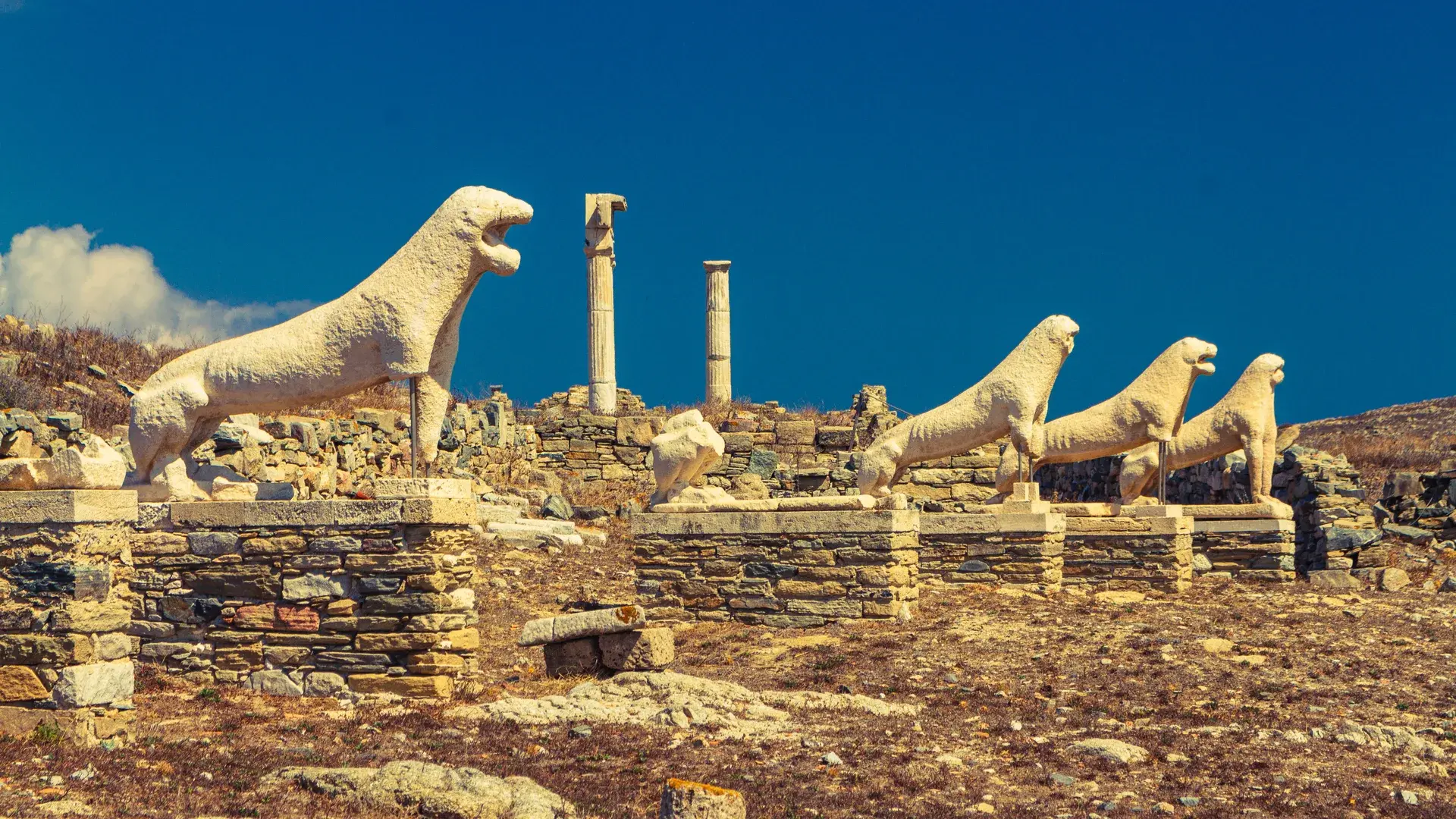
The Town Hall, the tile-roofed building on the waterfront, dates from 1780 and was first the seat of the Russian consul general of the Archipelago; next to it stands the island’s first public school, from 1859. From the pier opposite leave the boats for Delos, and the ferries use the new port at Tourlos.