What is the meltemi?
The meltemi is the strong north wind of the Aegean summer, which Greek meteorologists also call the Etesians. The National Observatory of Athens explains it as a seasonal wind that forms when two pressure systems combine over Greece: a thermal low to the south-east and an anticyclone over central Europe.
The closer the isobars, the stronger it blows. The Hellenic National Meteorological Service (HNMS) adds that these seasonal northerlies, together with the sea breeze, are what temper the summer heat on the coasts and across the Aegean.
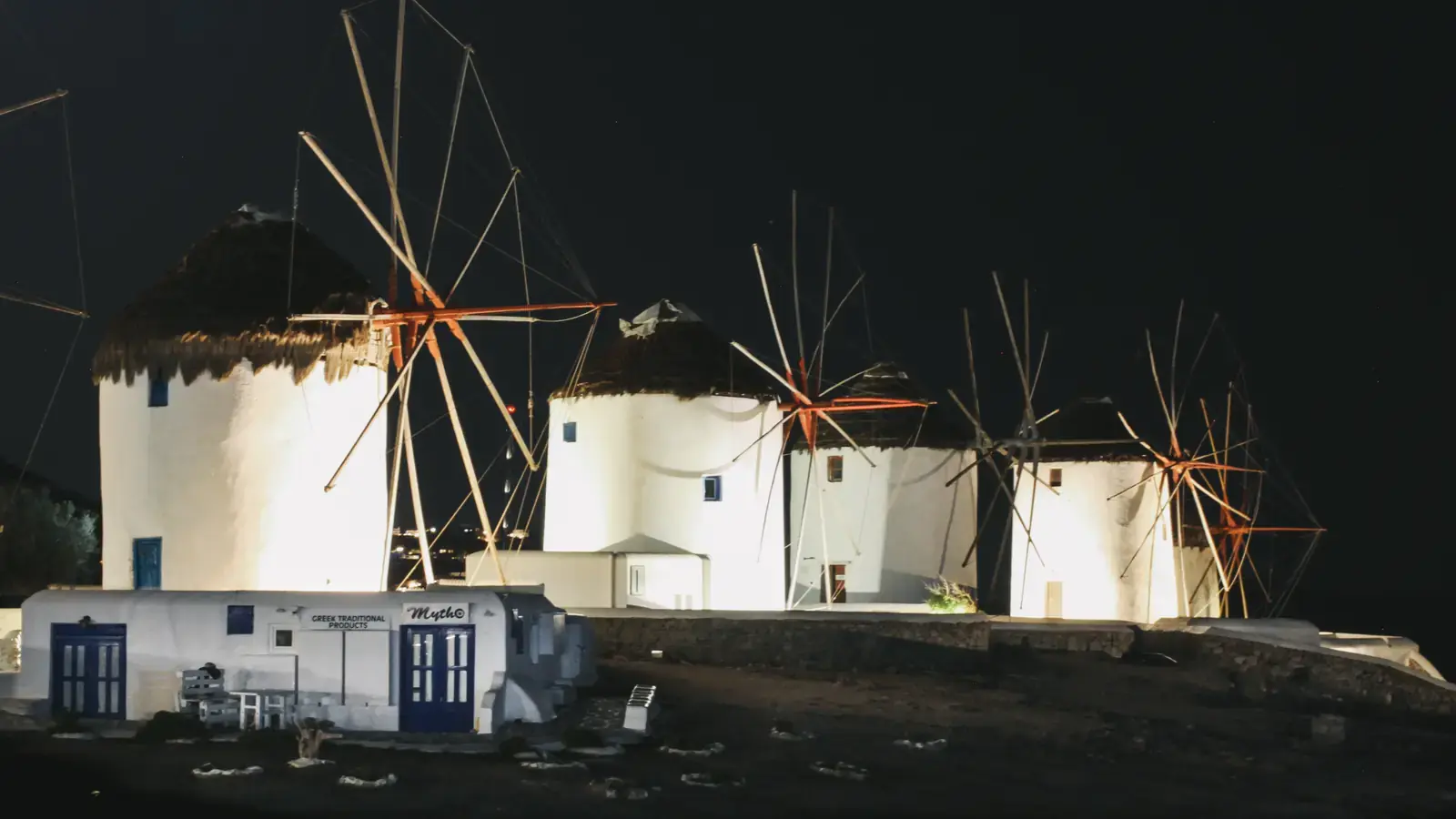
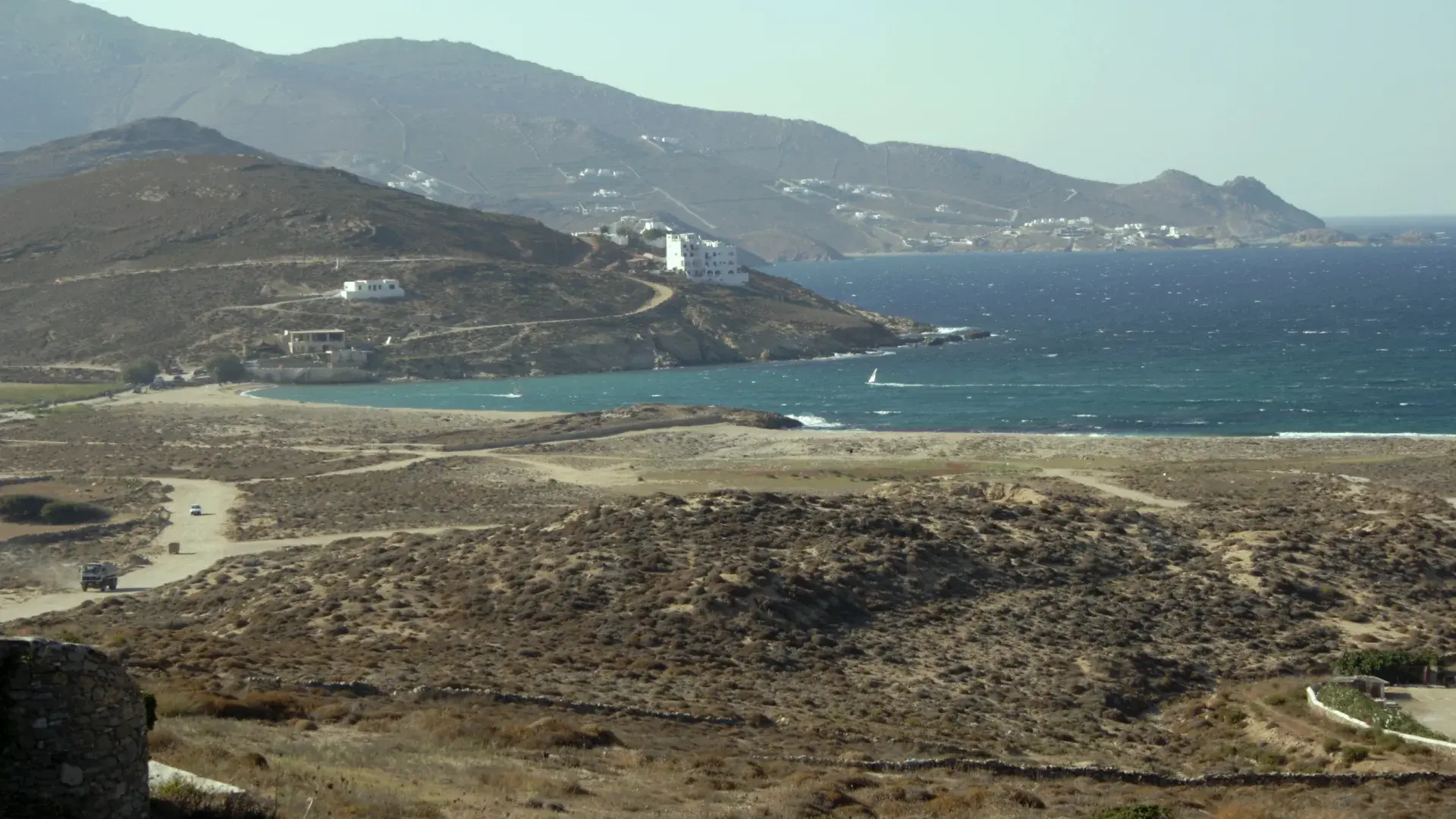
On Mykonos the north wind is the rule rather than the exception. The municipality records northerly winds 38.2% of the time and north-easterlies 16.3%, with calm only about 11.3%; the wind usually runs at force 2–6 on the Beaufort scale.
When does the meltemi blow in Mykonos?
Mainly from June to August. The Observatory's study of winds over the Mediterranean, from April 2003 to March 2006, found mean speeds of more than 8 m/s, about 29 km/h, at 10 metres above the sea in the central and south-eastern Aegean in each of those three months.
In June, when the Etesians set in, the rest of the Mediterranean averaged no more than 4 m/s. In September the Etesians begin to weaken and the Aegean mean drops to 7 m/s or less, while in May most of the sea stays at or below 5 m/s.
In winter the same study places the strongest mean winds in the northern Aegean and the Gulf of Lion. And a meltemi day can still bring violent gusts: on 25 June 2026, as northerly winds strengthened over the southern Aegean, the Observatory's station at Porto, on neighbouring Tinos, recorded 101 km/h.
What is the weather like in Mykonos month by month?
Mild in winter, warm and dry in summer. These are the HNMS normals for its Mykonos station over 1991–2020: the minimum, mean and maximum monthly temperature, rounded as the service publishes them.
July and August are the warmest months, both with a mean of 26 °C; January and February are the coolest, at 11 °C.
| Month | Minimum | Mean | Maximum |
|---|---|---|---|
| January | 9 °C | 11 °C | 13 °C |
| February | 9 °C | 11 °C | 13 °C |
| March | 10 °C | 12 °C | 15 °C |
| April | 13 °C | 15 °C | 18 °C |
| May | 16 °C | 19 °C | 22 °C |
| June | 21 °C | 24 °C | 27 °C |
| July | 23 °C | 26 °C | 29 °C |
| August | 23 °C | 26 °C | 28 °C |
| September | 20 °C | 23 °C | 26 °C |
| October | 17 °C | 19 °C | 22 °C |
| November | 14 °C | 15 °C | 18 °C |
| December | 10 °C | 12 °C | 14 °C |
When does it rain in Mykonos?
Mostly between mid-autumn and early spring. HNMS splits the Greek year into a cool, rainy season from mid-October to the end of March and a warm, dry one from April to October, and notes that winter is milder on the Aegean islands than in northern and eastern Greece.
The municipality describes a long dry period and low rainfall: an annual average of 371.7 mm for the period 1989–1996. The frost-free period lasts 260 days, from 1 March to 15 November.
The HNMS monthly rainfall normals for the station are incomplete, so we do not give a rain figure for each month.
Which beaches in Mykonos are sheltered from the meltemi?
The ones that face west and south. The municipality warns that most of the northern beaches are exposed to the island's strong wind and suggests visiting them on days when the north wind is weak.
On the other side, it describes the sand at Agios Stefanos, on the west coast, as leeward, and Ornos, south of Korfos, as a beach out of the wind. Korfos itself belongs to the windsurfers, with strong wind from a steady direction.
If wind is what you are after, the municipality calls Ftelia, in the bay of Panormos, the ideal beach for windsurfing and kitesurfing, and notes that European freestyle windsurf competitions are often held at Kalafatis.
Does the meltemi change your plans by boat and at night?
Sometimes. Small boats sail by the wind: the boats to Delos refund the ticket or move you to the next departure when it is too strong to sail, as explained in Delos from Mykonos. On a windy day, check with the ferry company before heading to the port; the routes are in ferries from Mykonos to Paros and Naxos.
At night the wind is part of the setting. With calm air only about 11.3% of the time, take a light layer to the waterfront; the rest is in what to wear at night in Mykonos.
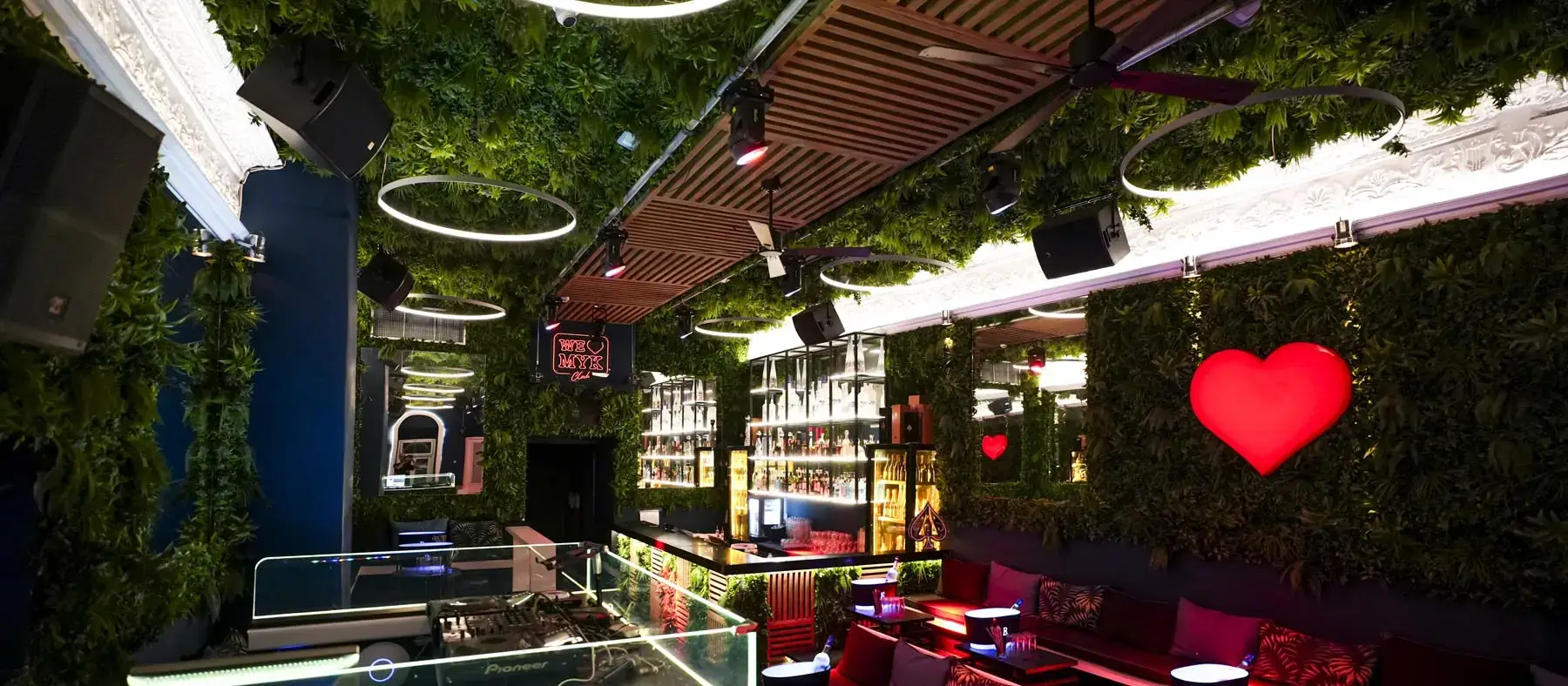
WE ❤ MYK Club is in the lanes of Mykonos Town, and the summer 2027 club nights will appear in the 2027 season.